

Ship-to-Shore Integration Solution

BECOME PART OF ASI'S EXPERT TEAM
Improves Cost
Efficiencies
Cloud-based
Integrated Solution
Optimizes Fleet Operations
& Performance
Customized
Services
The Ship-to-Shore Integrated System leverages advanced communication, information, and intelligent technologies to deeply integrate vessels with shore-based operations, enabling comprehensive, real-time interconnectivity and collaborative management.
The system adopts a “one platform + multiple apps” architecture, allowing flexible deployment and user-friendly customization. It utilizes onboard serial servers to collect navigation, communication, and sensor data, merging it with CCTV surveillance feeds before transmitting everything to the Oceansite server. Through various communication methods, this data is sent to the shore-based cloud platform.
Shore-based users can easily access the latest vessel status by simply using a web browser to connect to the ship-shore integrated cloud platform.

Basic Modules
- Fleet Management: Shore-based management oversees the entire fleet and obtains the operational status of each vessel.
- Voyage Data Visualization: Real-time display of vessel navigation status, along with global online electronic charts.
- Electronic Chart:Provides global online nautical charts with overlaid vessel positions, navigation routes, signal strength, and other information.
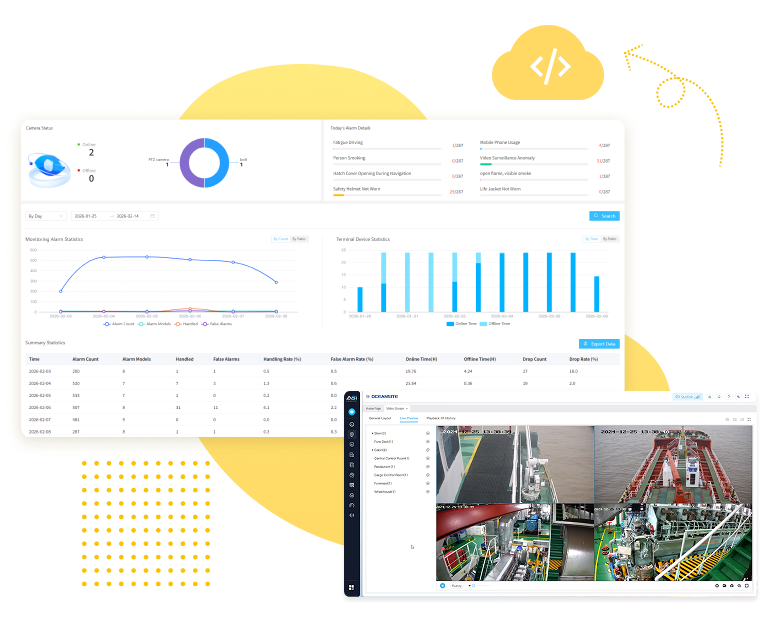
- CCTV:View real-time and historical surveillance videos of various areas on the vessel.
- Comprehensive Monitoring And Alarm:Integrates onboard automation systems such as AMS, cargo control system, and valve control system. The vessel and shore-based management can simultaneously monitor the ship's status.

Extended Modules
- Smart CCTV: Provide real-time and historical monitoring of all ship areas, automatically detecting unsafe behaviors and triggering alarms.
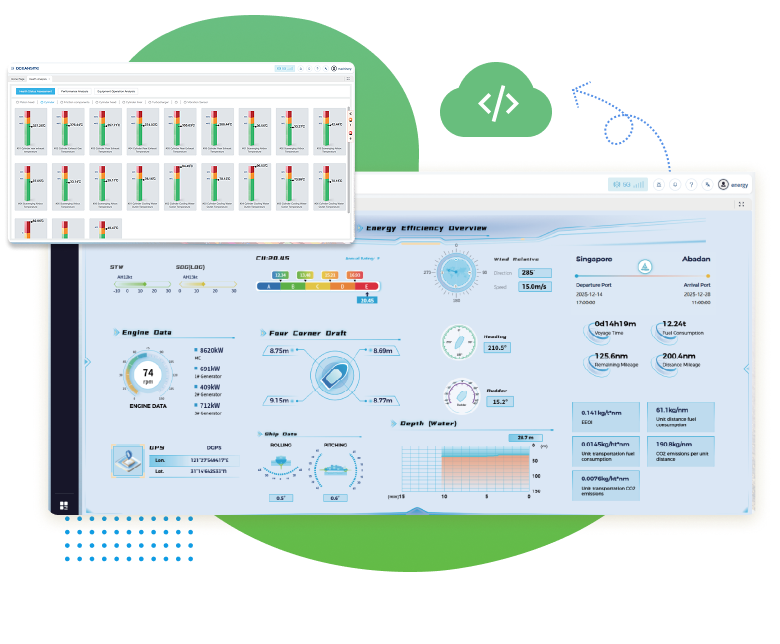
- MRV Energy Efficiency Management: Collect, verify, report, manage, analyze, and statistically process energy consumption data during the ship's voyage.
- Electronic Record Book: The digitization of records for oil, waste, cargo, engine parameters, fuel conversion, ozone-depleting substance consumption, and ballast water allows for easy viewing, approval, modification, and printing.
- Network Monitoring:By monitoring the status of managed devices, detecting unsafe conditions with real-time alerts, and diagnosing device health through network topology, comprehensive ship network health diagnostics are achieved.
- Noon Report: Record daily voyage data, fuel consumption records, and store fuel volume data for the ship.
- Plan Maintenance System:A software system for managing ship equipment maintenance and upkeep, helping ship operators and managers effectively monitor, plan, and execute maintenance activities for the ship's equipment.
- Situational Awareness: Target ldentification + Intelligent Collision Avoidance
Intelligent Ship
- Intelligent Integrated Platform: By obtaining monitoring data and information on the ship's navigation status and energy consumption, real-time monitoring, assessment, and optimization of ship energy efficiency are achieved, continuously improving energy efficiency management.
- Intelligent Energy Efficiency: Monitoring, analyzing, and assessing the operational and health status of equipment and systems in the engine room provide decision support for equipment and system usage, operation and control, maintenance, and management.
- Intelligent Machinery: Collect, store, integrate, interact, share, and visualize data from various onboard systems to achieve comprehensive ship monitoring and intelligent management, while enabling data exchange with shore-based systems.